There’s something about riding a motorcycle that just hits different. The wind, the freedom, the open road ahead of you. But you know what makes it even better? Having someone right there beside you.
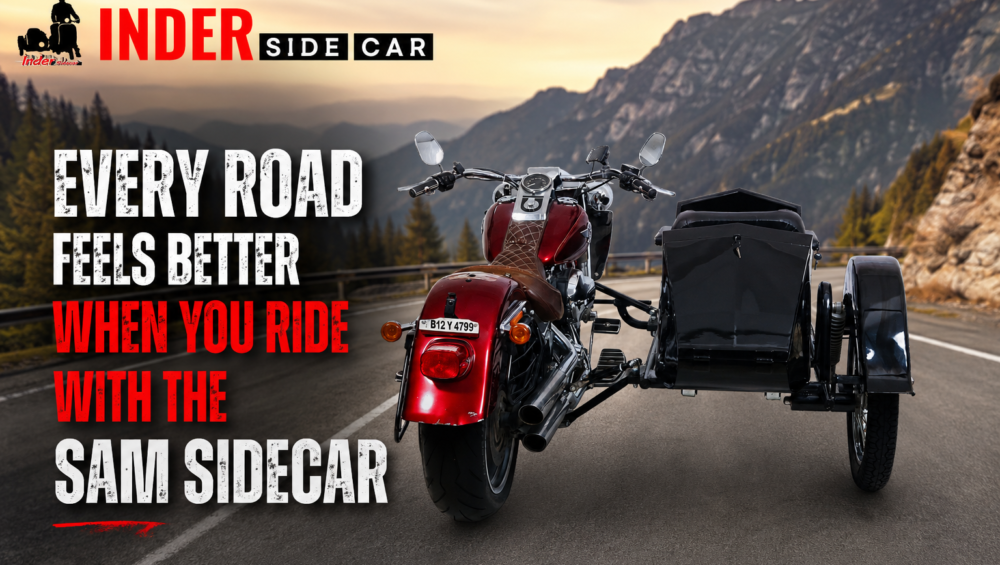
That’s exactly what the SAM Sidecar does. It turns your solo ride into something shared. Something bigger. And honestly once you try it, going back to riding solo feels a little empty.
What Is a Motorcycle with Sidecar and Why Every Rider Needs One
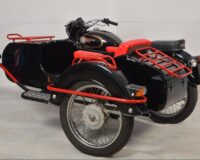
Look, if you’ve never tried a motorcycle with sidecar before, you’re genuinely missing out. A sidecar is a one-wheeled pod that attaches to the side of your bike. Your passenger sits in it. Comfortably. Without clinging onto you for dear life.
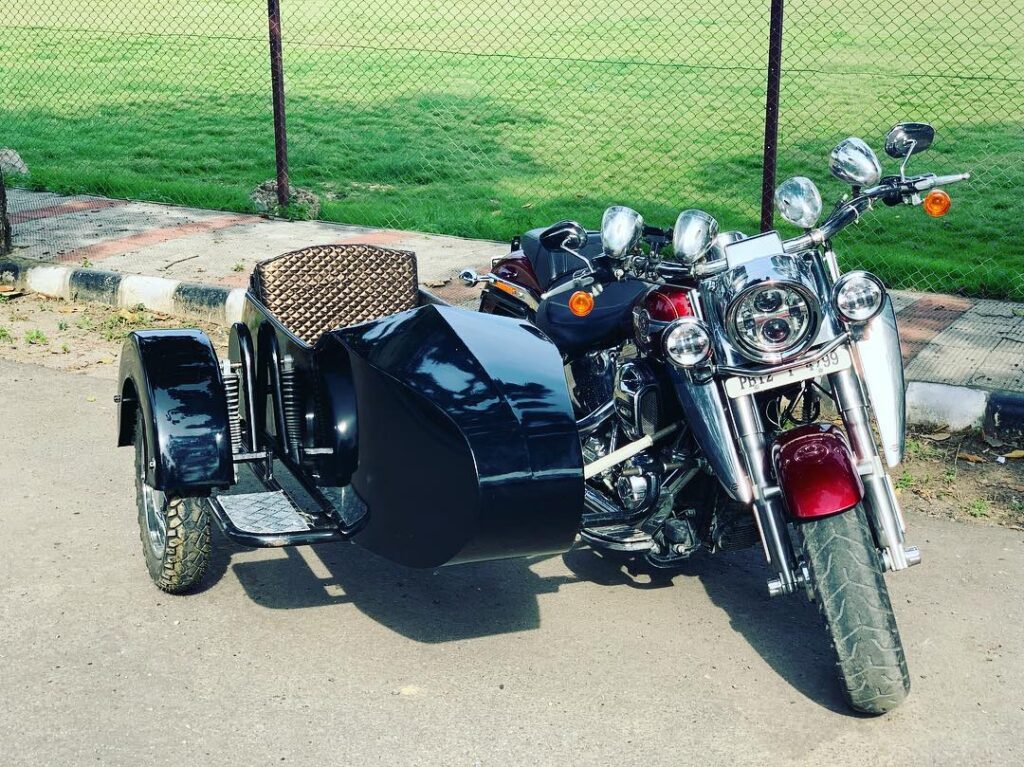
Motorcycle sidecars have been around for over a hundred years. But the SAM Sidecar feels very much like something made for right now. Built for modern riders who want more from every journey.
More and more people are looking for a sidecar in India to travel with family, with pets, with elderly parents. The SAM Sidecar solves all of that in one clean setup. No second vehicle needed. No compromise on fun.
The SAM Sidecar is Built Tough Not Just Pretty
First thing you notice is the build quality. The body is made from imported CRC 20SWG metal. It doesn’t rust easy, it doesn’t dent like tin foil, and it’s painted to match your bike’s color perfectly.
The chassis underneath is mild steel pipe. OD 34mm with 26mm thickness. Really strong. And vibration free too, which matters a lot when you’re riding on rough roads day after day.
The suspension is independent with shock absorbers and a trailing link unit. Double ball bearing hub. What that means in real life is your passenger isn’t getting bounced around every time you hit a pothole. And trust me, on the roads we have, that’s everything.
A Motorcycle Sidecar That Fits Almost Any Bike You Own
This is what people always ask. Will a motorcycle sidecar actually fit MY bike?
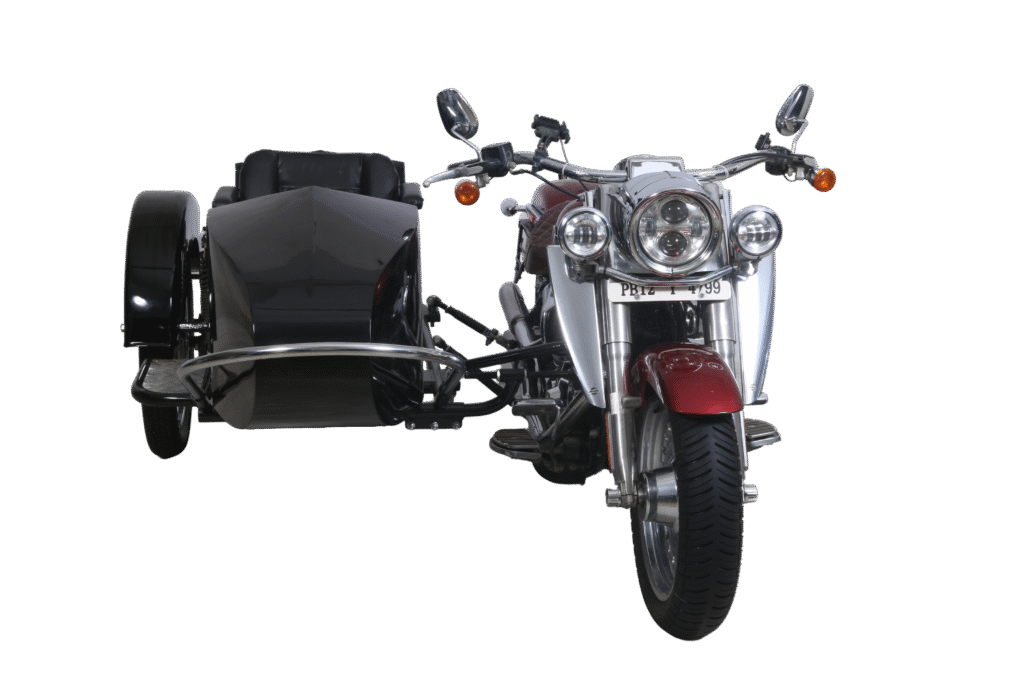
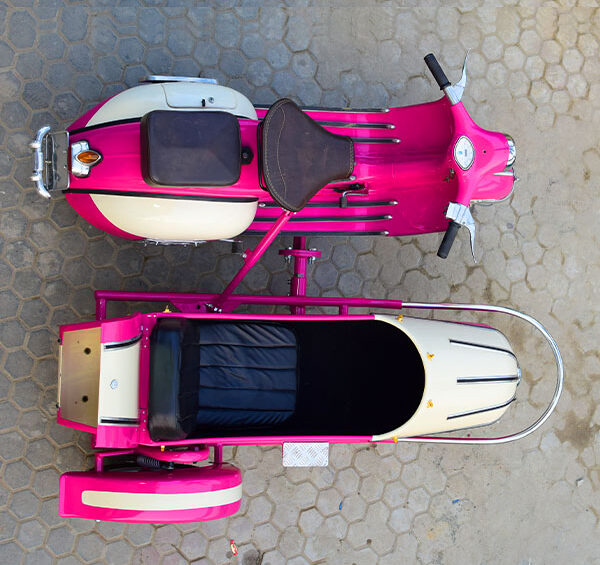
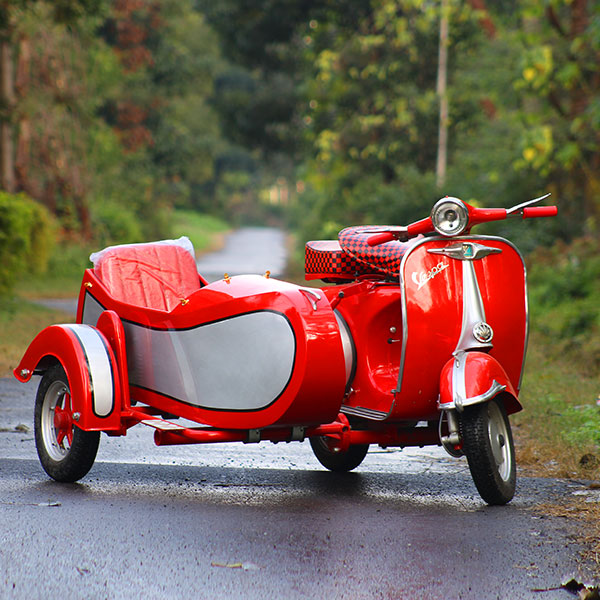
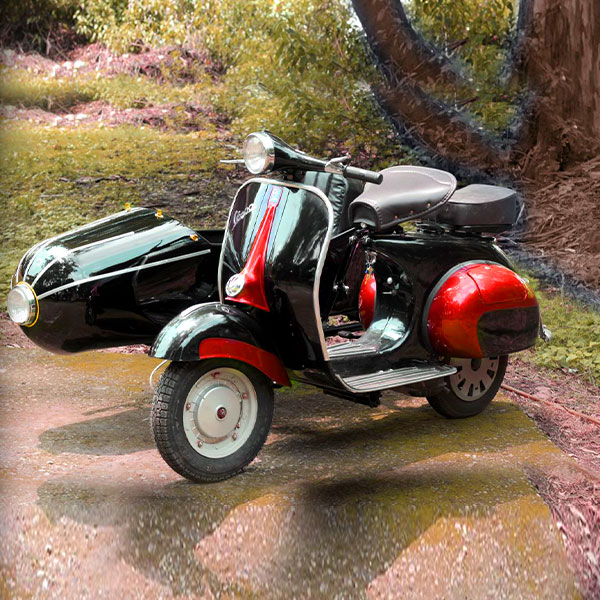
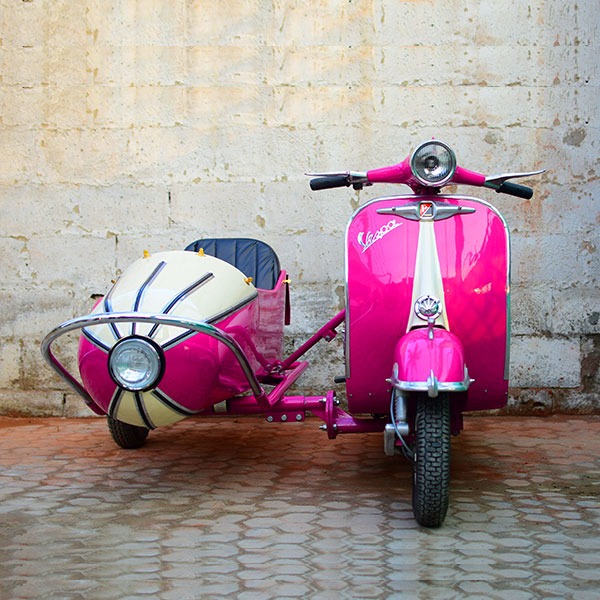
For the SAM Sidecar, the answer is almost always yes. It works with Royal Enfield motorcycles, Harley Davidson Fat Boy, Vespa Piaggio, and even Vintage Vespa VBB models from 1960 to 1990. Pretty wide range honestly.
If your bike has a tubular frame, you can attach the SAM Sidecar using the universal mounting kit. Fabricated steel adopter bolts, adjustable rod bolts, U clamps. It connects to the seat mount and allows lean in and lean out. Clean and solid setup.
This is what makes this indian motorcycle sidecar stand out from the rest. Designed for the bikes people actually ride every single day.
Comfort Inside the SAM Sidecar is Genuinely Good
The seat is bucket type. Fully upholstered. There’s a lock and base, and you can remove it quickly for cleaning. So if your dog sheds or your kid spills something, not a big deal at all.
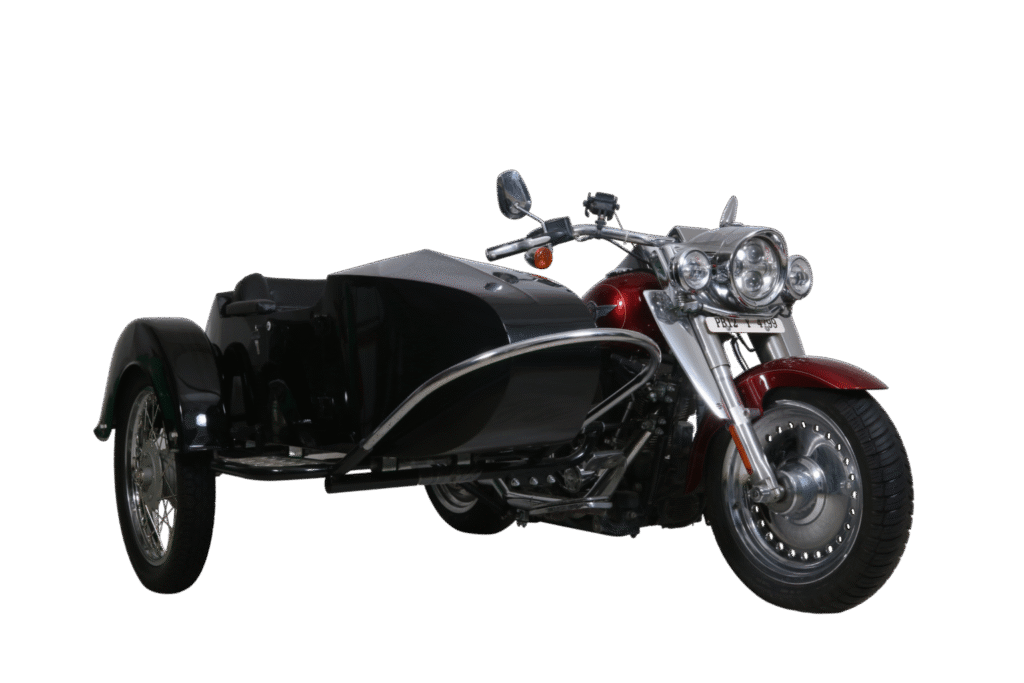
The luggage compartment at the back is spacious and lockable. Opens downward, sits behind the seat. Great for long trips where you need to carry things but don’t want them strapped all over the bike.
There’s also a chromed luggage rack included as an accessory. Aluminum trim strips run around the curvature. Small details but they add up to something that feels really premium when you’re out on the road.
Every SAM Sidecar is Built with Serious Safety in Mind
The front bumper is stainless steel. There for extra protection in case something comes at you from the front.
Mudguard is sheet metal matched to the body shape. There’s a backlight, a rear reflector, and side indicators built in. So you’re visible at night. That matters more than people think when you’re riding a motorcycle and sidecar combo on busy highways.
The bottom is painted with waterproof paint. Rust proof. Longer life. And it comes with a tanque cover for the rainy season so water doesn’t collect inside the body.
It’s thought through. Not just slapped together.
SAM Sidecar Dimensions That Work on Any Road
Length is 72 inches. Width is 45 inches not counting the motorcycle. Height is 36 inches. Ground clearance is 12 inches which is solid for all kinds of terrain.
Space inside is 19 inches from body corner to corner. Enough for an adult to sit with reasonable comfort. A child? Very comfortable. A medium sized dog? Absolutely fits.
Total weight of the complete sidecar is 60 kg. Once it’s mounted and you’re rolling, you honestly forget it’s there after a while. That’s how well balanced it is.
Why the SAM Sidecar is the Most Trusted Motorcycle and Sidecar in the Market
This isn’t some random product thrown together overnight. The team behind the SAM Sidecar has been manufacturing sidecars since 1989. Over three decades of doing this one thing really well.
They are authorized by the Automotive Research Association of India, ARAI. Government approved through RTO. That matters a lot if you want to ride legally without any headaches at checkposts.
The SAM Sidecar ships globally. Customers in Australia, the US, and across the world trust this product. If you are searching for an indian motorcycle sidecar for sale, there honestly isn’t a more credible option out there right now.
Priced at around Rs 35,000 in India and USD 3,000 for international buyers. For what you get, that’s genuinely fair.
Who Should Get a Motorcycle and Sidecar Combo
Honestly, more people than you’d think.
Families who want to ride together without needing a second vehicle. People with elderly parents or differently abled family members who still want to be part of every journey. Pet owners who want to bring their dog along without stress. Adventure riders who need extra luggage capacity on long trips.
And yeah, people who just think a motorcycle and sidecar combo looks incredibly cool. Because it does. Especially fitted on a Royal Enfield or a Harley Davidson Fat Boy. Heads turn everywhere you go without even trying.
What Makes the SAM Sidecar Different from Everything Else Out There
A lot of sidecars in the market are either imported at crazy prices or locally made with questionable quality. The SAM Sidecar sits right in the sweet spot.
It’s made locally with imported materials. ARAI certified. RTO approved. Fits the most popular bikes people actually own. And backed by a team that’s been doing this longer than most sidecar brands have even existed.
That’s not marketing talk. That’s just facts.
The indian motorcycle sidecar market has grown a lot in recent years but very few options give you this level of build quality at this price point. The SAM Sidecar is genuinely one of a kind.
Get Your SAM Sidecar Today and Never Ride Alone Again
If you have been thinking about getting a motorcycle sidecar, stop thinking and start riding.
The SAM Sidecar is well built, well priced, and made by people who have been doing this since 1989. Whether you want to ride with your family, your pet, or just want to turn heads on the highway, this is the indian motorcycle sidecar you have been looking for.
Visit Inder Auto Industries today. Check out the SAM Sidecar, pick your bike model, choose your color, and hit the road.
Because every road really does feel better when you are not riding it alone.
FAQs About the SAM Sidecar
What is a motorcycle with sidecar and how does it work?
A motorcycle with sidecar is a regular motorcycle with a one wheeled passenger pod attached to its side. The SAM Sidecar attaches using a universal mounting kit and fits most tubular frame motorcycles easily and securely.
Is a sidecar in India legal to ride on public roads?
Yes. The SAM Sidecar is ARAI authorized and RTO approved by the Government of India. Completely legal to ride on public roads across the country.
Which bikes are compatible with the SAM motorcycle sidecar?
The SAM Sidecar fits Royal Enfield motorcycles, Harley Davidson Fat Boy, Vespa Piaggio, and Vintage Vespa VBB models from 1960 to 1990. It also fits any tubular frame motorcycle using the universal mounting kit.
Where can I find an indian motorcycle sidecar for sale?
You can buy directly at indersidecar.com or reach out via email at sales@indersidecar.com. They ship across the country and internationally too.
How much does the SAM Sidecar cost?
In India the SAM Sidecar is priced at around Rs 35,000. For international buyers the price is approximately USD 3,000.
Can the motorcycle and sidecar handle rough and bumpy roads?
Absolutely. The SAM Sidecar has independent wheel suspension with shock absorbers, a trailing link unit, and 12 inches of ground clearance. Built to handle whatever road you throw at it without complaint.