Categoriesmotorcycle with sidecar

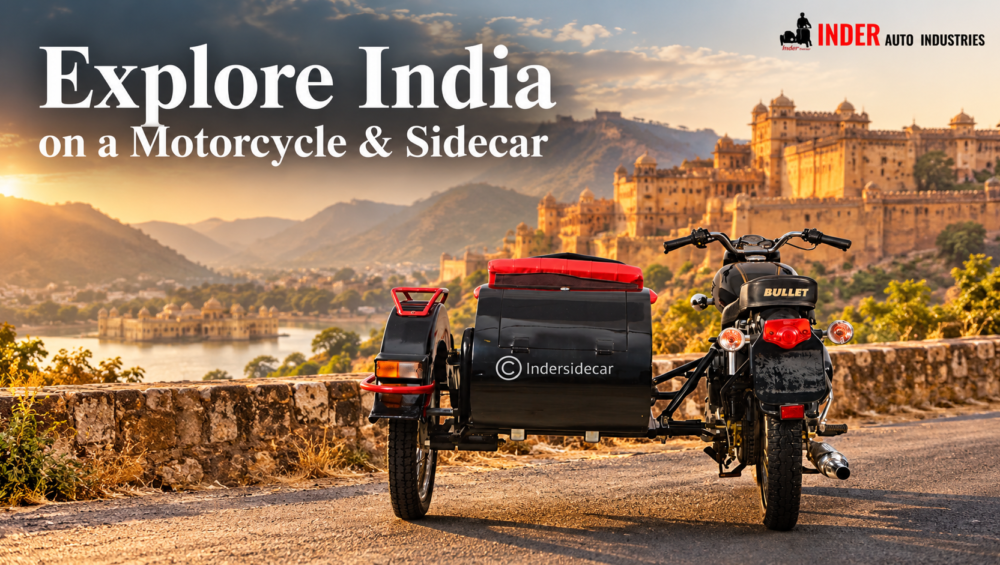
The New Way to Explore India on a Motorcycle and Sidecar

Anyone who has done a long ride with a pillion knows how it goes. You’re enjoying the road, the wind, the whole point of being on a bike and meanwhile the person behind you has gone quiet because their back has given up somewhere around hour three. The bags aren’t happy either, bungeed on wherever there was space.

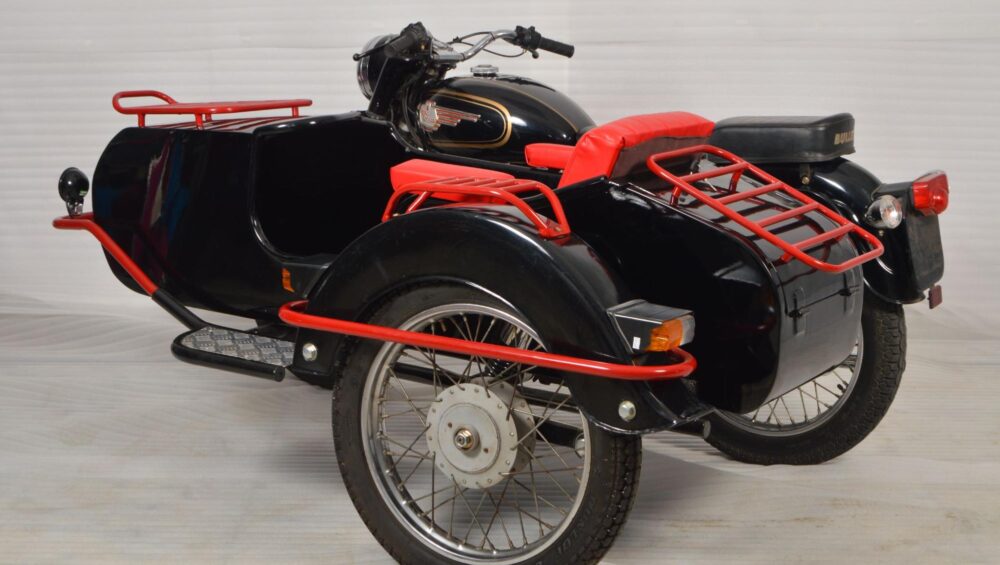
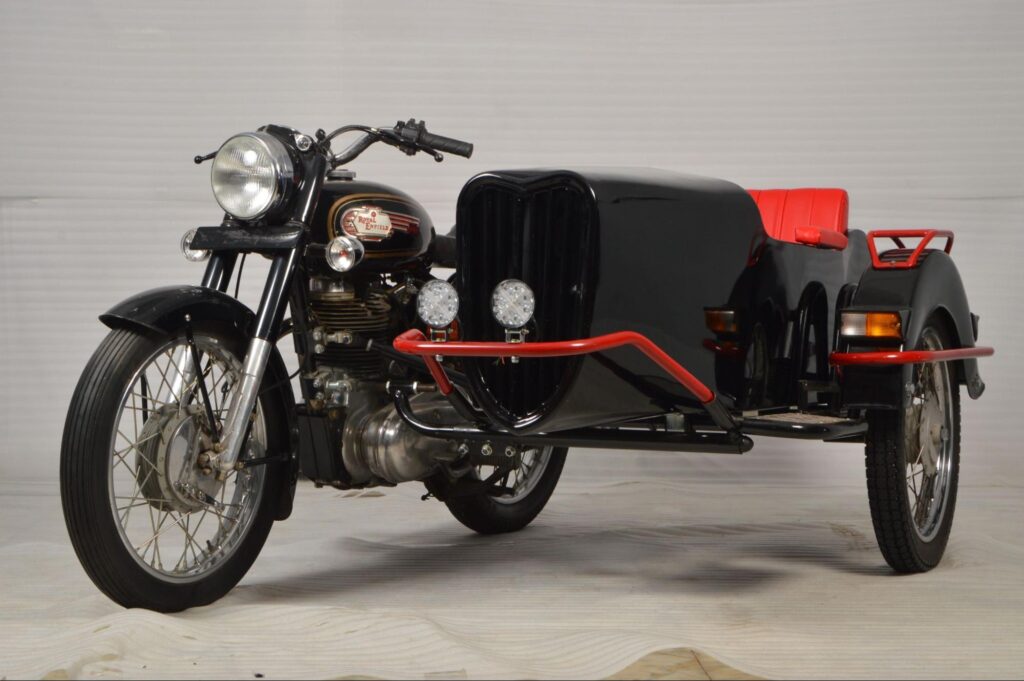
A motorcycle with sidecar sorts out most of that. Your passenger gets an actual seat, the luggage goes in the sidecar body and when you pull over for chai the whole rig just stands there without you propping it up. Touring stops being a one-person hobby and becomes something a couple can do together without anybody sulking.

It’s also worth saying that sidecars aren’t the museum pieces they were a few years back. Hotels want them, cafes want them, and plenty of ordinary riders are asking which roads suit one, how to get ready for a long trip, and what separates a solid build from a flimsy one. That’s what this post is about.

Why a Motorcycle Sidecar Is Changing Long Distance Touring

Most bike touring in India is really about distance. Get up early, ride hard, carry as little as possible, and expect your passenger to cope. Fine if you’re alone. Not so fine if you’re riding with your wife, your parents or anyone who’d rather not spend the next three days walking like they’ve been on a horse.

With a sidecar the passenger sits beside the bike, properly supported, and the rider no longer has a heavy load pulling at the back of the machine. Multi-day trips start to look realistic for two people, which is probably why so many riders who gave up on touring after one miserable trip are coming back to it.
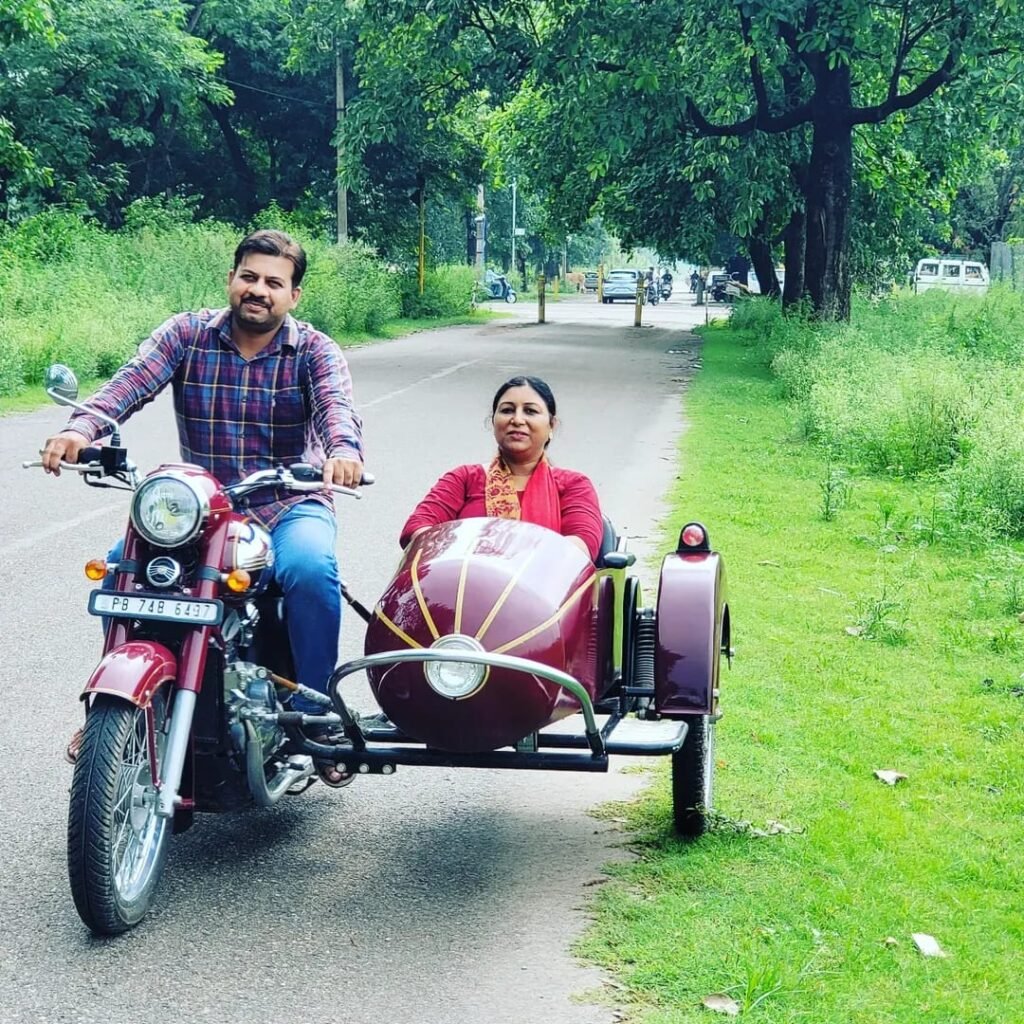
Motorcycle Sidecar

What Makes the Side Car in India a New Way to Travel

The sidecar itself is old news. What’s different is who’s using it and why. For a long time it was either a vintage showpiece or a work vehicle, and now people are buying a side car in India for weekend rides, long tours, and the simple pleasure of it. Tour operators have started slotting sidecar rides into heritage routes, and some resorts and cafes use them because a taxi can’t offer the same thing.

The bigger change is in how people ride. A rig isn’t quick and doesn’t pretend to be, so you end up stopping more, talking more, and noticing the place you’re actually passing through instead of the next toll plaza.

Seeing India at a Different Pace on a Motorcycle Sidecar

Slow is the whole appeal here. At a steady speed you catch the details you’d normally blur past: a roadside stall selling guavas, a field of mustard, that side road you’d have ignored at 90. Taking the detour isn’t a big decision when nobody behind you is tired.

The passenger’s view is better too. You sit low and close to the road, with a wide open side and no car window in the way, and the rider gets a machine that stays upright by itself at every stop. Photographers and couples seem to love this the most, for obvious reasons.

Best Routes for an Indian Motorcycle Sidecar Tour

Not every road suits a rig, though some are properly good.

Rajasthan is the easy choice. Jaipur, Jodhpur, Jaisalmer and Udaipur can be strung into a single trip, the highways are wide, fuel isn’t hard to find and you’ll have people staring at you in every village you pass, which is half the fun.

The hills of Himachal Pradesh and Uttarakhand are lovely at a slow pace, but plan them carefully. Steep climbs, narrow stretches and high passes are hard on the engine and the brakes, and a few mountain roads simply aren’t meant for a sidecar, so find out about road conditions before you commit.

Along the coast through Goa, Konkan and Kerala things get much easier, with plenty of stops and plenty of food, which makes it a good first long trip. And closer to home, the flat, well-connected roads of Punjab and Haryana are ideal for weekends, especially if you’re new to the rig and want to build confidence before going far.

Planning a Motorcycle With Sidecar Trip the Right Way

Don’t plan big days at the start. A rig asks for more attention than a normal bike, and a rider who is worn out by late afternoon tends to make bad calls, so keep the distances modest until you know how it behaves.

Look at the road in advance if you can. Deep sand, badly broken tarmac and very narrow lanes are the things that ruin a sidecar day and it helps to know where the fuel pumps and mechanics are before you’re stuck wishing you did. Pack a basic toolkit and a puncture kit, and think about what you’d do if a tyre went, because the third wheel is one more thing that can go wrong.

Season matters more than people expect. Heavy monsoon rain, winter fog and peak summer heat all change how the rig handles and how far you can see, so choose when you go based on where you’re going.

Luggage and Carrying Capacity in a Motorcycle Sidecar

This is one of the best things about a motorcycle sidecar. Bags, camping gear, a camera kit and whatever else you’re dragging along can all sit in the sidecar body, which leaves the bike lighter and better balanced than it would be with everything strapped on the back.

That said, load it with some thought. Keep the heavy stuff low, tie it down properly, spread the weight sensibly, and stay within the limit for your rig, because too much in the sidecar changes how the whole vehicle steers and brakes. A decent build has proper mounting and storage designed for what it’s actually going to carry.

Choosing an Indian Motorcycle Sidecar Built for Touring

Touring is far harder on a sidecar than pottering around town. A good Indian motorcycle sidecar needs a rigid mounting frame, a strong chassis and suspension that suits the load, and the body has to put up with hours of vibration, heat and rain without cracking or rattling loose.

Fitment is just as important. Alignment and wheel angle decide how the rig handles, how the tyres wear, and how tiring it is to ride all day. Poor fitment might not show up on a short test ride, but on a long trip it will, usually when you’re a long way from help, so put build quality and proper fitting ahead of looks and price.

The bike matters as well. Heavier, torque-rich motorcycles cope with the extra weight better than light commuters, especially uphill or with a passenger and luggage on board. Have the frame and engine checked before fitting, and if a builder tells you your bike isn’t suitable, believe them.

How a Motorcycle With Sidecar Handles on Long Roads

It doesn’t ride like a normal motorcycle, and it’s better to know that before the first ride. The rig doesn’t lean, so you steer it more like a small car, and under braking it can pull a little toward the sidecar side, which is why early, smooth braking is the habit to build. Left and right turns feel different too, because of where the weight sits.

None of this is hard, it just takes practice. Spend a few sessions in an empty open area before any long trip, then build up the distance gradually, and most riders feel comfortable within a few days.

Safety and Legal Points for Side Car in India Travellers

Check the tyre pressure on all three wheels regularly, since uneven pressure affects a rig more than a standard bike. Don’t overload it, keep your speed sensible, and take extra care on wet roads, steep descents and crowded streets. If a child is riding along, use proper seating and follow local safety rules.

On the legal side, registration and modification rules for a sidecar-fitted motorcycle vary by state, so confirm with your local RTO. And if you’re crossing state borders, get your documents, insurance and registration sorted before you leave, not at a checkpoint.

Motorcycle Sidecar Tourism and Business Opportunities

A motorcycle sidecar can earn its keep commercially as well. Heritage hotels, resorts, cafes and tour companies use them for city rides, photo experiences, wedding entries and promotions, mostly because people remember them and photograph them without being asked.

For a business it works as both a service and a marketing tool, but only if it’s reliable. A commercial sidecar has to be strong, comfortable and consistent day after day, which brings you straight back to who builds it.

Why Inder Auto Industries Is a Trusted Indian Motorcycle Sidecar Manufacturer

When you’re buying a motorcycle with sidecar in India, the manufacturer matters as much as the product. A sidecar isn’t a bolt-on accessory. It changes how the whole vehicle steers, brakes and carries weight, so the design and the fitting decide how safe the rig will be over thousands of kilometres.

Inder Auto Industries builds sidecars with that in mind. Each unit is designed for Indian road conditions, with attention to chassis strength, mounting frame rigidity, suspension setup and wheel alignment, and the motorcycle is assessed before fitting, since frame strength, engine torque and brake condition all affect how well a bike can carry a sidecar.

Motorcycle Sidecar FAQs for Indian Riders

Is a motorcycle with sidecar legal in India?

Generally yes, but registration and modification rules vary by state and RTO. Check with your local transport office before fitting one.

What is the price of a motorcycle sidecar in India?

There’s no fixed price. It depends on the build type, materials, comfort features and the bike it’s fitted to. A custom build costs more than a basic cargo unit, so get quotes based on your exact requirements.

Can a sidecar be fitted on any motorcycle?

No. Heavier, torque-rich bikes with strong frames and reliable brakes work best. Get the frame and engine inspected before fitting.

Is an Indian motorcycle sidecar safe for children?

It can be, with sturdy construction, proper seating and careful riding. Follow local safety rules whenever a child is on board.

Is it difficult to ride a motorcycle with sidecar?

It feels odd at first because the rig doesn’t lean into corners. Most riders adapt within a few days of practice in an open, low-traffic area.
Motorcycle With Sidecar in the UKCategoriesmotorcycle with sidecar

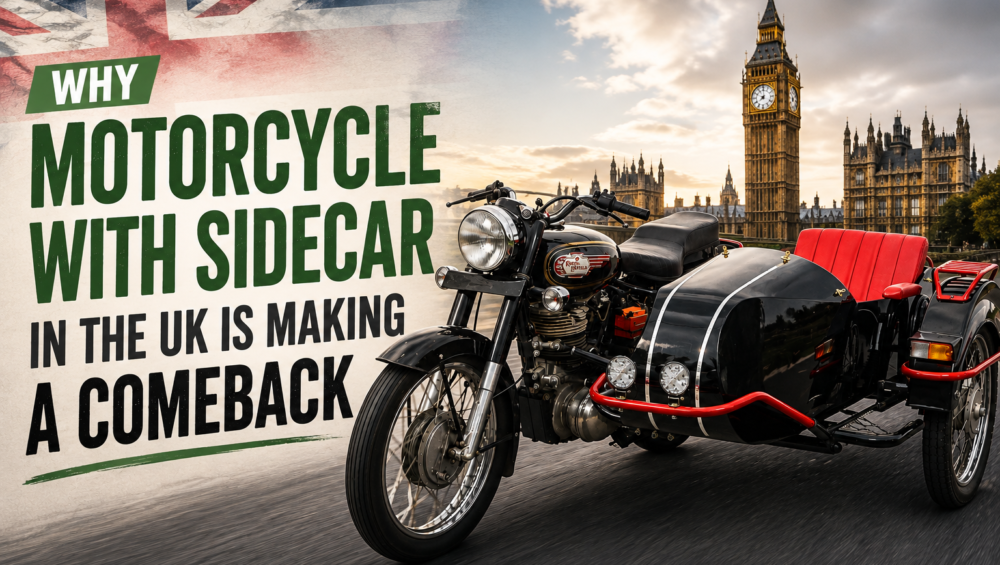
Why Motorcycle With Sidecar in the UK Is Making a Comeback

A motorcycle with sidecar used to be a rare sight on UK roads something you’d spot at a classic car rally or parked outside a country pub, not something anyone actually rode to work. It was a thing people looked at, not a thing people used. That’s changed. Sidecars are showing up at bike meets again, on commuter routes, back in dealer showrooms, bolted onto everything from restored BSA Bantams to modern adventure bikes. And the reasons run deeper than nostalgia. There’s real demand behind it now and that’s really what this piece is about.

The Comeback Isn’t Just About Looking Retro

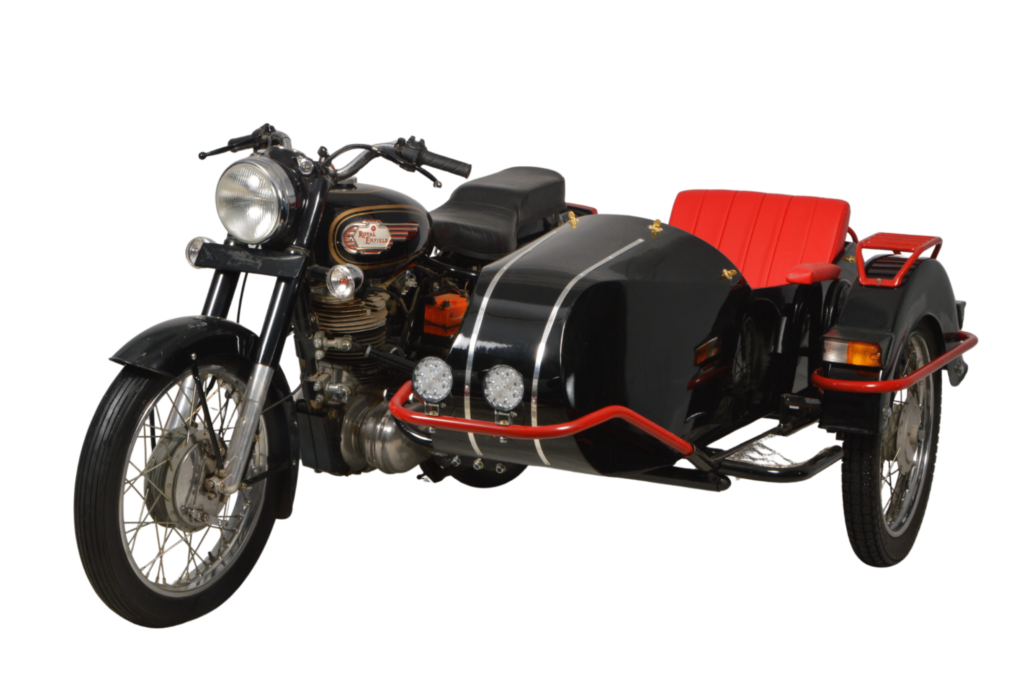
Motorcycle With Sidecar in the UK

A motorcycle sidecar in UK  garages isn’t there purely for the look, even if the retro appeal is hard to deny. There’s a practical story underneath the trend that most coverage skips past.

A standard two-wheeler has real limits. Storage is minimal, passenger comfort is poor and stability at low speed depends heavily on the rider’s skill. Add a sidecar and that equation shifts  better balance, more carrying capacity and a setup that’s a lot more forgiving for newer or older riders. That’s really what’s behind the phrase “motorcycle and sidecar in UK is trending again”: a change in what riders actually need day to day, not just a passing style.

Who’s Actually Buying Sidecars in the UK Right Now

The buyer base is wider than most people assume. Commuters make up a solid chunk of it people drawn to the extra carrying capacity who’d rather not move up to a car just yet. Then there are older riders, plenty with decades on two wheels behind them, who like the added stability enough to keep riding instead of hanging up the leathers. Small businesses have gotten in on it too: delivery operators, mobile trade stalls, market vendors, all using a side car in UK settings as cheap, distinctive transport that doubles as a bit of a marketing asset. Restorers and collectors round out the picture, many chasing period-correct outfits from decades gone by.

That spread of buyers is a big part of why sales figures for sidecar-paired motorcycles have climbed even as parts of the wider motorcycle market struggled. Some recent modern classic launches  retro singles paired with proper sidecar outfits  have topped their category’s sales charts, which says a lot about how this stopped being a fringe segment.

Why UK Roads and UK Riders Suit the Sidecar Comeback

There’s a strong practical fit here with British roads specifically. UK roads are narrow, twisty and full of hedgerows and roundabouts that punish anything too wide or too fast. A well set-up sidecar outfit copes with that kind of road network better than a lot of larger touring bikes do. It sits stable at pace, loads easily for a weekend trip and fits naturally with the UK’s strong DIY motorcycle culture, where owners still tend to maintain and tune their own machines.

Add an established classic bike scene into the mix and the UK was already well placed for a sidecar revival the moment affordable, well-built outfits started coming back onto the market.

Practical Reasons People Are Choosing Motorcycle Sidecars Over Trikes or Cars

This comparison comes up a lot. Trikes offer plenty of stability, but they ride closer to a small car and lose much of that proper motorcycle feel along the way. Cars handle the weather and family-practicality side of things well enough, but they bring higher running costs and none of the character that pulls people toward bikes to begin with.

A motorcycle with sidecar in UK lands somewhere between the two. You keep the feel of riding an actual motorcycle, but gain real carrying space for shopping, luggage or a passenger. Low-speed stability picks up noticeably too, which matters more than people expect once the roads turn wet. Running and insurance costs tend to land lower than a trike or car and there’s a genuinely active ownership community behind it all  rallies, shared know-how, and decent parts support.

What to Actually Check Before Buying a Sidecar Outfit in UK

Not every motorcycle suits a sidecar conversion and not every sidecar is built to the same standard. Before buying, it’s worth checking carefully:

  • Whether the donor bike has adequate frame strength and mounting points for a safe, proper fitment
  • Alignment and toe-in, since a setup that’s even slightly off will make the outfit hard to control
  • Braking setup, since a sidecar changes how the whole rig stops, not just how it turns
  • The credentials of the fitter  sidecar fitment is a specialist job, not something to rush through in a home garage

This is really where a sidecar comeback either works or doesn’t, at the individual level. A well-built motorcycle sidecar in UK rides with real confidence and safety. A poorly fitted one is genuinely hard to control, and can be dangerous.

Sidecars Are Firmly Back on UK Roads

Motorcycle sidecars aren’t a novelty act anymore. They’ve become a legitimate, growing category within UK motorcycling, driven by practicality, cost, community and style in roughly equal measure. Whether the goal is a classic outfit for weekend riding or a modern, practical setup for daily use, there’s more genuine choice and expertise around now than there has been in decades.

Inder Auto Industries Leads the UK Sidecar Revival

Inder Auto Industries builds and supplies sidecars for the UK market with the fit, safety and finish this comeback demands. From classic restorations to modern conversions, every outfit gets engineered properly rather than treated as an afterthought. For expert guidance on the right sidecar setup, Inder Sidecar is a trusted place to start for riders across the UK.

FAQs

Is a motorcycle with sidecar legal in the UK?

Yes. Motorcycle sidecars are fully legal in the UK, as long as the outfit is fitted correctly, registered properly, and meets the standard roadworthy requirements that apply to any vehicle on the road.

Is a different licence required to ride a motorcycle sidecar in the UK?

In most cases, an existing full motorcycle licence covers a sidecar outfit, though the rules can vary depending on when the test was passed and the size of the bike involved. It’s worth double-checking the specific category before buying.

Why are motorcycle sidecars becoming popular again in the UK?

A mix of practicality, affordability, a strong classic bike culture and demand for more stability and carrying capacity without switching to a car or trike. It’s a trend driven more by function than by nostalgia.

Can any motorcycle be fitted with a sidecar in the UK?

Not every bike is suitable. Frame strength, mounting points, and overall build quality all affect whether a fitment ends up safe and roadworthy. A specialist fitter, such as Inder Auto Industries, can assess a specific bike before any work begins.

Motorcycle Sidecar in UKCategoriesmotorcycle with sidecar

Experience the UK Like Never Before With a Motorcycle Sidecar

Motorcycle sidecars are back and not just as a nostalgia trip. Riding a motorcycle sidecar in UK conditions is a different kind of ride altogether, one that’s less about getting somewhere fast and more about actually being on the road. A car can’t give you that. A standard bike can’t either, not quite.

Sidecars are picking up traction across the country for reasons that go well beyond sentiment. Build quality matters. So does picking the right manufacturer. Get either wrong and the whole experience falls flat.

The Motorcycle Sidecar in UK Scene Keeps Growing

Sidecars used to sit firmly in vintage territory. Classic bike collectors, weekend enthusiasts, that sort of crowd. Still true today, but the audience has widened a fair bit.

Fuel costs, ULEZ expansion, parking fees that keep climbing  all of it has pushed riders to look at a motorcycle with sidecar in UK cities as a real alternative to running a second car. You get room for a passenger or cargo, lower running costs, easier parking in most cases. Worth checking local congestion rules first though, they’re not the same everywhere.

There’s an accessibility side to this too, one that gets skipped over a lot. Sidecar attachments have given riders with mobility limitations a way back onto the road. For a good number of people this isn’t a hobby. It’s independence, plain and simple.

Motorcycle Sidecar in UK


A Strong UK-Ready Sidecar Rig Comes Down to a Few Things

Not all sidecars are built the same and in the UK that gap shows up fast. Unpredictable weather, tight rural roads, roundabouts everywhere  a rig needs to handle all of it without falling apart.

Chassis build quality matters most. A reinforced frame with solid welds holds up on rough B-roads. A weak one flexes, and flex at speed is dangerous.

Weatherproofing isn’t optional here. It rains constantly in this country, so sealed bodywork and a proper windscreen aren’t luxury add-ons, they’re basics.

Bike compatibility trips people up more than anything else. Mounting kits need to match the motorcycle’s frame geometry exactly. Get the alignment wrong and handling suffers, sometimes badly.

Load rating and suspension need to hold steady under regular use. A sidecar that sags under weight becomes unstable fast, and that’s not something to ignore.

An established manufacturer gets these details right more consistently than a one-off custom build usually does.

UK Roads Bring Out the Best in a Motorcycle Sidecar

The UK, honestly, might be one of the better places anywhere to actually use one of these. Scenic routes through the Lake District, the Peak District, Wales, the Scottish Highlands  all of it suits the slower pace a sidecar naturally forces on you. Touring, not racing.

Classic bike rallies and shows around the country, Goodwood included, regularly draw sidecar combinations. There’s a real community built around this, bigger than people expect.

Beyond the events and the scenic stuff, plenty of riders use a motorcycle with sidecar in UK daily life too. School runs, errands, getting around town. It’s not just for weekends.

What to Check Before Buying a Motorcycle Sidecar in UK

A few things worth sorting out early:

Confirm the mounting kit matches your exact motorcycle model and year before committing to anything.

Ask about frame material and warranty terms. A rig meant to last should come with a guarantee on the structural welds.

Figure out the main use case first, daily commuting, touring, or rally appearances all call for slightly different specs.

Sort insurance and DVLA registration ahead of time. UK sidecar rules differ from standard motorcycle rules, and the combination needs proper registration before it’s road legal.

Inder Auto Industries Builds Sidecars Riders Trust

Most of the sidecar market splits into two camps: vintage restorations or small custom builds with quality that varies wildly. Neither is ideal if reliability actually matters to you.

Inder Auto Industries has been building sidecars and mobility attachments since 1989. That’s a long run in an industry where most small players don’t last. The company holds ARAI approval (Automotive Research Association of India) along with government licensing for handicapped-vehicle attachment kits, not something every manufacturer bothers to secure.

The lineup includes the Euro, Rocket, Beemer, Retro, Sam and Vox sidecar models, each built with its own mounting setup rather than a rough universal fit.Decades of export experience mean shipping to the UK is a routine process, not guesswork.

Final Thought

A sidecar changes how you experience UK roads. Slower, more deliberate and honestly more rewarding for it. Whether it’s a scenic tour through Yorkshire or a rally weekend, a well-built rig adds something a solo bike just doesn’t.

For anyone serious about getting a motorcycle sidecar in UK roads this year, going with a manufacturer that’s actually proven itself over decades beats gambling on an untested build.

FAQs

Is it legal to ride a motorcycle with sidecar in UK without extra licensing?
Standard motorcycle licence categories generally cover sidecar combinations, but the combination still needs DVLA registration and insurance has to specifically cover the sidecar attachment.

Can any motorcycle be fitted with a sidecar?
Not really. Compatibility comes down to frame strength, mounting points and engine power. Manufacturers like Inder Auto Industries can confirm the right mounting kit for a specific bike.

How much does a motorcycle sidecar in UK typically cost?
Prices vary depending on model, materials, and customisation, from standard builds to premium versions with extra weatherproofing and storage. Best to get a direct quote based on your setup.

Are sidecars safe on UK roads, especially roundabouts and motorways?
Yes, once you adjust your riding style. Sidecars handle differently under braking and acceleration, so a bit of practice or training beforehand makes a real difference.

Does Inder Auto Industries ship motorcycle sidecars to the UK?
Yes. Decades of export experience mean sidecars, mobility attachments, and luggage trailers ship internationally, UK included, as a matter of routine.


Rocket sidecarCategoriesBusiness

How to Choose the Perfect Motorcycle Sidecar for Your Riding Style

Most riders aren’t just thinking about appearance. They want something solid, something that fits their daily riding habits. Adding a sidecar can look straightforward from the outside, but there’s more to it than people expect. It’s not only about attaching parts the balance, the engineering, and the setup all play a role in how the ride actually feels.When that isn’t right, the bike can feel awkward pretty quickly.

If you’re trying to find the right motorcycle sidecar, there are a few real-world things that matter more than looks. Let’s get into what actually makes the difference.

Understanding Your Riding Style First

The short answer is simple: your riding style decides everything.

Some people want the extra room for gear. Some just like the different vibe a motorcycle and sidecar brings it’s noticeable, not the same as every other bike out there. Problems usually start when you don’t think about how you’ll actually use it day to day. What looks perfect at first might not match your riding style later.

Ask yourself:

  • Are you riding long distances?
  • Carrying a passenger often?
  • Using it for equipment or business use?
  • Wanting classic retro aesthetics or modern practicality?

A touring rider might need comfort and storage. Someone searching for a motorcycle with sidecar for daily use may care more about durability and easy handling.

Why Motorcycle Sidecar Design Matters More Than You Think

Not all sidecars ride the same. Some feel stable and smooth. Others feel heavy or unbalanced. Most of that comes down to design and engineering.

High-quality builds focus on alignment and structure. A properly designed motorcycle sidecar changes how weight distributes across the bike. That means better handling and less strain on the motorcycle itself.

Cheap builds might look similar at first glance, but over time you notice the difference vibration, poor balance, faster wear. Engineering matters more than decoration.

Key Features of a Premium Motorcycle Sidecar

When riders search for an indian motorcycle sidecar or a custom setup, certain features separate premium builds from basic ones.

Strong Frame Construction

A reinforced frame keeps the sidecar stable under load. Whether carrying a passenger or cargo, structural strength prevents flex and improves ride confidence.

Smooth Mounting System

The mounting setup isn’t just a technical detail it affects how everything rides. Proper alignment between the motorcycle and sidecar helps with steering feel and reduces unnecessary tire wear. Builders with real experience usually focus on this first, because small mistakes here show up fast while riding.

Comfortable Passenger or Cargo Space

A good sidecar isn’t just attached  it’s usable. The cabin or platform should feel balanced, secure, and practical. Riders want space that works, not just something that fills space visually.

Classic Style with Modern Durability

Many people looking for an indian motorcycle sidecar want that timeless retro appearance. But modern materials and engineering bring reliability that older designs didn’t always have.

Choosing Based on Practical Use Not Just Looks

Truth is, style attracts attention, but function keeps riders happy long-term.

It’s easy to focus on appearance when choosing a motorcycle and sidecar. A lot of people do. But after some riding time, they find out the setup isn’t as practical as they hoped. The right combination should feel natural, stable at speed, and comfortable enough that longer trips don’t feel like a struggle.

Think about:

  • Weight distribution.
  • Ease of maintenance.
  • Compatibility with your motorcycle model.
  • Long-term durability.

A smart choice saves money and frustration later.

Long-Term Value and Quality

A premium motorcycle sidecar is an investment. Not just for today, but for years of riding.

Quality materials reduce maintenance. Proper engineering protects both the motorcycle and the sidecar structure. And builds from experienced manufacturers hold their value better over time.

Riders who choose strong, well-built designs usually avoid the common problems seen with low-quality attachments.

Why More Riders Are Choosing Motorcycle and Sidecar Setups Again

There’s a shift happening. Riders want versatility again.

Riding a motorcycle with sidecar changes things. You’ve got space for a passenger, room for gear, and a riding feel that’s nothing like a standard two-wheeler. It’s practical, but also kind of addictive. Once people get used to it, solo riding doesn’t always feel the same anymore.

Final Thoughts

Choosing the perfect motorcycle sidecar isn’t about trends or hype. It’s about finding a setup that matches how you ride and how you plan to use it long-term.

Focus on build quality. Look at engineering, not just appearance. And choose a design that gives stability, comfort, and real-world usability.

The right sidecar doesn’t just change your bike it changes how you ride altogether.

Ready to Build Your Perfect Ride?

Looking for a motorcycle sidecar designed for real-world riding and long-term reliability? Visit Inder Auto Industries to get your perfect ride and explore premium motorcycle sidecar options built for performance and durability.

FAQs 

What should I check before buying a motorcycle with sidecar ?

Look at frame strength, mounting alignment, passenger comfort, and compatibility with your motorcycle. Engineering quality makes the biggest difference.

Are indian motorcycle sidecars good for long rides?

Yes, when properly built. A well-designed indian motorcycle sidecar provides stability and extra storage, making long-distance touring more comfortable.

Is riding a motorcycle sidecar different from a regular motorcycle?

Yes. Steering dynamics change because of the third wheel. But with proper setup and balance, many riders find it more stable and practical.

Why is build quality important in a motorcycle sidecar?

Better materials and engineering reduce maintenance issues, improve safety, and increase long-term durability.