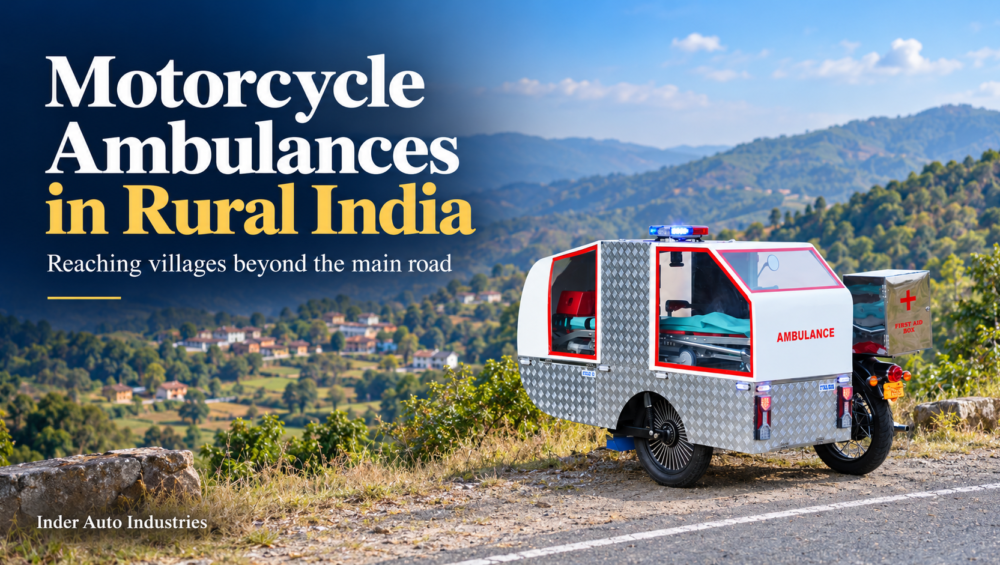
Emergency care in rural India often comes down to one thing, the road. Many remote villages sit at the end of tracks that are narrow, unpaved, or under water for weeks in the monsoon. Some have no proper road at all. A four-wheeled ambulance can’t get through, and when it does, it usually arrives late.
That delay costs lives. A motorcycle ambulance is one of the few practical answers to it. Light and narrow, it can travel over ground that stops a van, and it brings emergency transport to villages the ambulance network has passed over for a long time.
Reaching Remote Villages Faster Where Standard Ambulances Stop
Standard ambulances are built for paved roads. They’re wide and heavy, and they need firm ground under them. A hill track, a river crossing, a flooded field or a lane barely wider than a bullock cart will stop them. Sometimes a single damaged stretch of road is enough to make the driver turn around.
So what happens to the patient? Often a relative carries them on a cot, or they’re loaded onto a tractor trolley or someone’s private vehicle, none of it equipped for medical transport. The first hour after an injury or illness gets used up just getting out of the village. Accident victims, women in labour and people with heart or breathing trouble are hit hardest.
The hospital may be far away, but the real gap is the last few kilometres, where no emergency vehicle goes. A bike ambulance is built for that gap.
A Motorbike Ambulance Built for Difficult Terrain
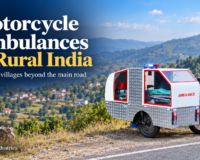
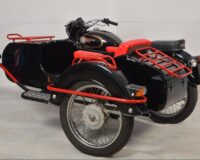
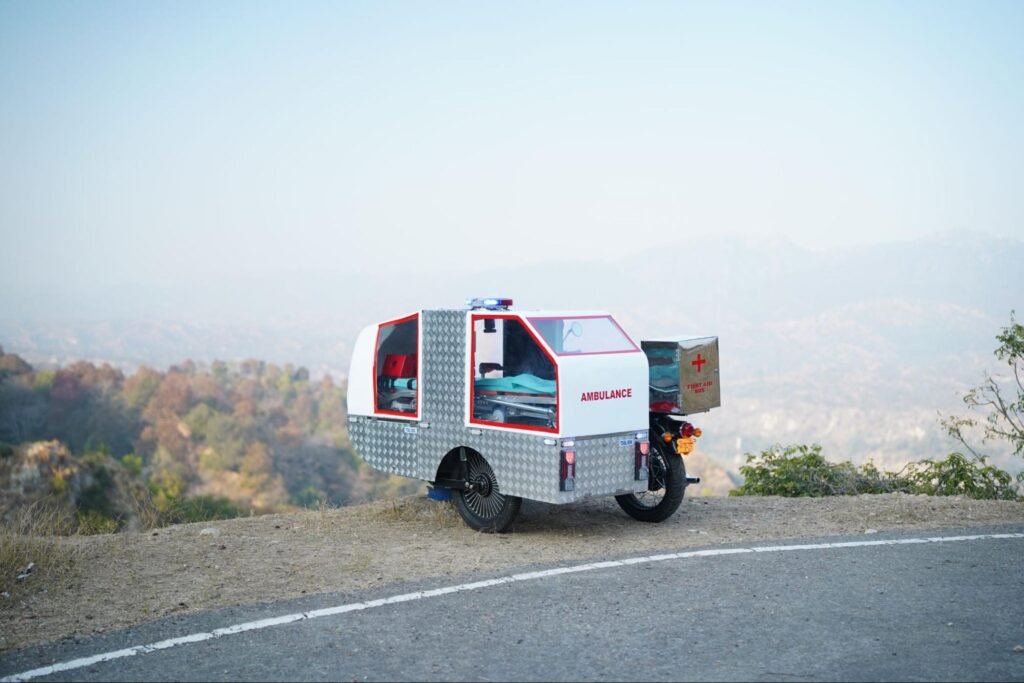
A motorbike ambulance is a motorcycle fitted with a patient carriage or sidecar, made to move a patient safely over rough terrain. The patient can lie down or recline. An attendant or paramedic rides along with basic first-aid equipment, and depending on the build there may be weather protection and oxygen support.
It doesn’t replace a full ambulance, and it isn’t meant to. Think of it as the first link. It reaches the patient where the road ends and carries them either to the nearest clinic or to a larger ambulance waiting on the main road.
That split works well. The big ambulance stays on good roads where it performs best, and the motorcycle covers the hard stretch. Together they give villages an emergency chain that many never had.
Bike Ambulance in India Saving Time Across Hills, Floods and Rural Belts
A bike ambulance in India makes the most difference where terrain or poor infrastructure limits access. Hill and mountain villages are an obvious case, because steep, narrow, landslide-prone roads suit two wheels far better than a large van. In flood-prone and monsoon-hit areas, a lighter vehicle can push through mud and shallow water that an ambulance can’t.
Remote farming districts and tribal belts face a different problem, long distances and very few vehicles. Health workers there may cover many villages, so a dedicated two-wheeled unit can change response times noticeably.
Crowded lanes in dense towns are a smaller but real use. The vehicle can slip through traffic that traps a standard ambulance, which counts most in the minutes right after an accident.
Key Benefits of a Medical Motorcycle for Rural Healthcare
Speed is the biggest advantage of a medical motorcycle. Reaching a patient in minutes instead of hours improves the chances of survival and recovery. Cost is the second. These vehicles are far cheaper to buy, fuel and maintain than a full-sized ambulance, so the same budget stretches to more villages.
They’re also easy to base at a village health centre or with a trained local responder. That shortens the distance to the patient, since the vehicle is already nearby and doesn’t have to come from a distant town.
Maternity emergencies, road accidents, snakebite, sudden cardiac or breathing problems, all are cases where time decides the result. For health departments and NGOs working on tight funds, low cost combined with wide reach is hard to beat.
Choosing a Reliable Motorcycle Ambulance for Safe Patient Transport
Builders vary a lot in quality, so it pays to look closely before buying a motorcycle ambulance. Start with the patient. The carriage has to hold them securely with as little vibration as possible, because a rough ride can make an injury or a difficult labour worse.
Rider control comes next. A loaded sidecar handles differently from a normal motorcycle, and that matters on bad roads. Then look at the frame, the welding and the suspension, since these decide whether the vehicle is still sound after years on rough tracks and not just a few months. Weather protection counts too, as patients are often moved in rain, heat or cold.
Last, and easy to overlook, is serviceability. In remote areas, spare parts and local support decide whether a vehicle stays on the road or sits idle after its first breakdown. Ask any manufacturer how repairs and spares are handled before you place an order.
Inder Auto Industries as a Trusted Motorcycle Ambulance Manufacturer in India
For organisations looking for a motorcycle ambulance in India, Inder Auto Industries designs and builds sidecars and motorcycles for medical transport, made for Indian road conditions. The focus is practical construction that suits local terrain, real load requirements, and the service realities of rural areas.
Every build starts with the conditions the vehicle will actually face. Narrow lanes, steep gradients, muddy tracks and long distances from the nearest workshop all shape how the frame, suspension and patient carriage are designed. A vehicle that runs well on a smooth test road can fail quickly in a village, so durability and ease of repair are core requirements.
The company works with organisations that need dependable emergency transport where standard ambulances can’t go, including hospitals, NGOs, panchayats and government health programmes.
FAQs
What is a motorcycle ambulance?
It’s a motorcycle fitted with a patient carriage or sidecar, used to move sick or injured people over roads too narrow or rough for a standard ambulance.
Is a motorcycle ambulance in India legal?
Motorcycle ambulances are used in several Indian states for rural and hilly areas. Registration and modification rules vary, so check requirements with your local transport authority before purchase.
Can a bike ambulance carry a patient lying down?
Well-designed models allow the patient to lie down or recline with an attendant seated alongside. Always confirm stretcher dimensions with the manufacturer.
Who should buy a medical motorcycle?
Hospitals, NGOs, health departments, CSR teams and village committees serving areas with poor road access.
How is a motorbike ambulance different from a normal ambulance?
It’s smaller, cheaper to run, and able to reach places large vehicles can’t. It works as a first-response vehicle, not a full ICU on wheels.
How can I order a bike ambulance from Inder Auto Industries?
Contact the Inder Auto Industries team with your location and requirements, and they can guide you on the options that suit your area.