I still remember the exact morning it hit me, standing at my own front door with keys in hand and honestly no clue how I was even going to get to the market, which is like two streets away, not far at all. Not because I didn’t know the way, obviously, I’d walked that same stretch a thousand times before my accident, but I just couldn’t physically do it anymore and that was the problem. Not without help. Not without someone gripping my arm the whole way like I was about to shatter or something, which, some days, kind of felt true.
That morning changed something in me honestly, and that’s really the whole reason I’m writing this thing at all.
Living With a Disability Means Depending On Everyone Around You
Here’s the part nobody really talks about when it comes to disability and it’s not even the big stuff, not really. It’s the small stuff, the stuff that quietly wears you down over months and years. Asking your neighbor to grab milk when she’s out anyway. Waiting around for your son to get off work just so he can drive you to the pharmacy for something that should’ve taken ten minutes tops. Saying “it’s fine, don’t worry about it” when it really, really wasn’t fine, not even close.
I spent almost two years like that and honestly dependent isn’t even a strong enough word for how some of those days felt, I don’t know what is.
I looked into a few options along the way, wheelchairs mostly, but those weren’t cutting it, not for the distances I needed or those slight inclines near my house that somehow feel like actual mountains when you’re the one pushing yourself up them. So I started researching handicap scooters in India, mostly out of desperation more than any real hope, if I’m being honest with you here.
The First Day I Stepped Out Without Needing Anyone’s Help
I won’t pretend it fixed everything overnight because it didn’t, not even close. But within a couple weeks I was doing things I hadn’t done in years, honestly years. Going to the temple by myself. Picking up my own groceries without asking anyone first. Sitting outside a tea stall just because I felt like it that day, not because somebody drove me there and sat waiting in the car the whole time checking their phone.
https://www.instagram.com/reel/DcnJinLp01B/?utm_source=ig_web_copy_link&igsi=MzRlODBiNWFlZA==
There’s a kind of dignity in that, in doing small ordinary things by yourself, that’s genuinely hard to explain unless it’s been taken away from you first, and I hope most people never have to learn that the hard way.
Most Handicap Scooters in the Market Simply Fail to Deliver
This is where things got confusing fast, I won’t lie. There’s a lot of junk out there, and a lot of stuff that looks decent enough in a photo but falls apart, literally, in one case I actually tried, after just a few weeks of real use.
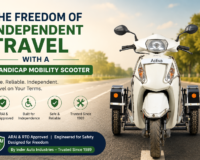
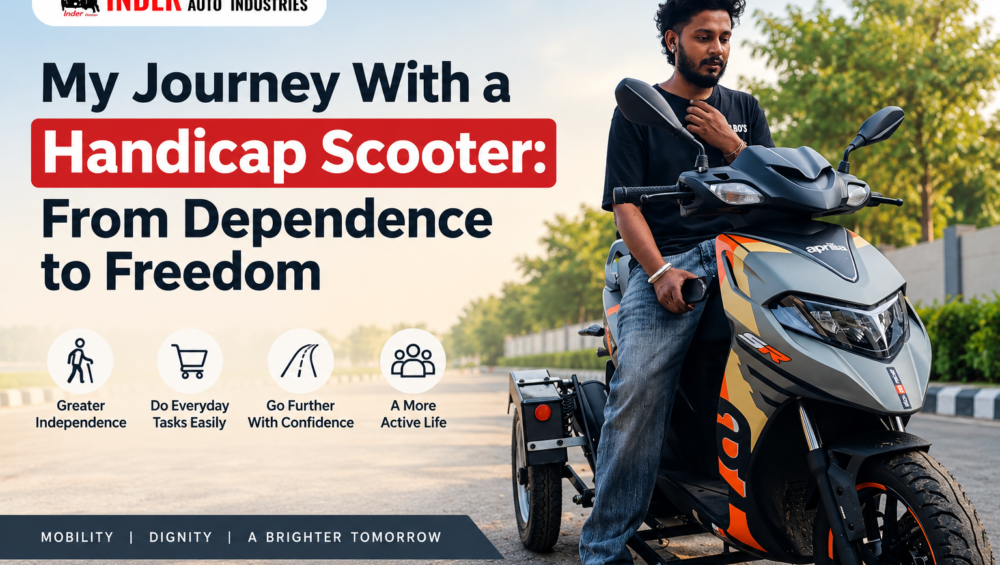
What I actually needed, what I kept coming back to, was a 3 wheel scooter for handicapped use, something stable enough that could still turn in tight spots like my kitchen or a crowded lane near the market, and something that wouldn’t just tip over the second it hit an uneven patch of road. Which, where I live, is basically every road, every single one of them.
A few things I picked up while shopping around, for whoever else is in this same boat:
Battery life matters way more than the brochure ever tells you it will. My first scooter promised a range it never once hit in real conditions, not even close honestly.
Ground clearance isn’t optional, not here. Roads in India aren’t smooth, not by a long shot, and a scooter that can’t handle a small pothole is going to leave you stranded somewhere, or worse.
Comfort over long stretches matters just as much as whatever’s on the spec sheet. You’re not test riding this thing for five minutes in some showroom under fluorescent lights. You’re living in it, every day, for years probably.
Eventually I landed on a proper handicapped scooter in India setup and that’s really where the “freedom” part of this whole story actually starts.
Handicapped Kit Retrofitment Deserves Your Attention Too
Here’s something I wish somebody had told me sooner, honestly. If you already own a scooter, or maybe it’s got sentimental value, or you just don’t want to shell out for a brand new vehicle right now, there’s this option called handicapped kit retrofitment. Basically they modify whatever scooter or vehicle you already have with hand controls, extra stability supports, that kind of thing, adaptive equipment built around your specific needs.
I didn’t personally go this route, but I’ve talked to a few folks in mobility groups yeah that’s actually a thing, and it helped me more than I expected it to who did, and they swear by it honestly. Cheaper than a full replacement in a lot of cases too, and it lets you keep something familiar while it adapts to wherever your body’s at now.
If your mobility’s changed but the vehicle itself still runs fine, this is worth asking about before assuming you need to start completely from scratch.
A Mobility Scooter Is Really About Getting Your Independence Back
I think the mistake I made early on, honestly, was thinking of a scooter as just some mobility aid. A medical thing. A lesser version of a normal vehicle, basically.
It’s not that though. It’s freedom, plain and simple, nothing more complicated than that.
It’s the difference between waiting around for someone else’s schedule to line up with yours, and just deciding on some random Tuesday that you feel like going somewhere, so you go. That shift matters more than any spec sheet ever could, at least to me it does.
Why Inder Auto Industries Is the Name I Trust With My Independence
I’ll be straight with you, I didn’t just walk into the first showroom I stumbled across. I did the rounds, honestly. Local dealers, a couple online sellers, even one guy operating out of what was basically a garage with a laptop.
Inder Auto Industries stood apart though, and not because their brochure said so or anything like that. It’s the small things, really. They actually asked about my daily routine before recommending some model, not just my budget like everyone else did. Their team understood the mechanics of handicap mobility scooters on a level most sellers just don’t bother with, down to weight distribution and how a scooter actually behaves on an incline versus flat ground, stuff that sounds small until you’re the one riding it.
They’ve been building and adapting vehicles for people with disabilities across India for years now, and honestly it shows in how they even talk about the product. Not like salesmen reading off a script. More like people who’ve genuinely sat with hundreds of customers and heard, firsthand, what goes wrong with the cheaper alternatives out there.
That’s really the difference between buying a scooter and buying the right scooter, if you ask me. And in a market that’s honestly a bit of a minefield if you don’t already know what to look for, having someone who’s actually a leader in this space, not just calling themselves one on a website somewhere, made all the difference for me.
Frequently Asked Questions
Are handicap mobility scooters legal to use on Indian roads?
Yes, generally speaking, mobility scooters built for people with disabilities are permitted on Indian roads, though it’s still worth double-checking your local municipal rules, especially if you’re planning to use it on main roads and not just footpaths or colony lanes.
What’s the difference between a handicapped scooter in India and a regular electric scooter?
Handicapped scooters are built specifically for stability and easier mounting or dismounting, and they usually include seating and control adaptations a regular electric scooter just doesn’t have. They’re engineered around accessibility first, speed a distant second.
Is a 3 wheel scooter for handicapped users more stable than a 4 wheel one?
Honestly it depends on the model and what you specifically need, but generally 3 wheel scooters offer a tighter turning radius, which helps a lot indoors and in narrow lanes, while still holding up fine for most everyday use.
Can I get handicapped kit retrofitment done on my existing scooter or car?
In a lot of cases, yes. Retrofitment usually means adding adaptive equipment, hand controls or support structures, to a vehicle you already own. Still worth getting your specific vehicle assessed first though, just to see what’s actually possible.
How do I choose the right handicap scooter for my situation?
Think about the terrain you’ll actually be riding on day to day, how far you typically need to go, your budget, and whether you’d rather buy new or go the retrofitment route. Talking to someone who genuinely understands both the medical and mechanical sides makes a real difference, more than most people expect.